Prioritizing Safety: Guidelines for Paving Site Workers

Despite advances in technology, roadway workers still face a high fatality rate—nearly twice the average of other industries.
Why Safety Has to Come First
In paving, there’s always pressure. The pressure to finish on time. The pressure to keep production high. The pressure to deliver work that will last. But here’s the truth: none of it matters if we fail at safety.
Every day, crews step into one of the most hazardous environments in construction. They work next to machines weighing tens of thousands of pounds, around live traffic that doesn’t always respect cones or barriers, and on surfaces that can reach 300°F.
And still—they show up. They put down miles of pavement that carry our communities, our economies, and our daily lives. The least we can do is protect them while they do it. Safety can’t just be a compliance checklist. It has to be a culture.
The Reality of Paving Risks
It’s easy to say “safety first,” but anyone who’s worked on a paving crew knows what that really looks like.
A roller reverses just a little too fast.
A car blows through a work zone.
A laborer starts to show signs of heat stress but doesn’t want to be the one who slows the team down.
These aren’t rare “what-ifs.” They’re the daily realities of paving. Heavy equipment moves in tight spaces. Crews often work at night or in low visibility. Long shifts create fatigue. Heat radiates off the mat.
The truth is, paving is high-risk work. But it’s not uncontrolled risk. With the right systems and culture, we can make sure crews go home safe after every shift.
Equipping Workers: The First Line of Defense
The most visible part of safety is gear. If crews aren’t properly equipped, we’ve failed before the first ton of asphalt hits the ground.
At a minimum, every paving worker should be outfitted with:
Hard hats to shield against falling objects.
High-visibility vests to keep workers visible in all conditions, especially at night.
Safety gloves to protect hands from burns, cuts, and abrasions.
Heat-resistant boots to guard against hot asphalt spills.
Safety goggles to keep eyes clear of dust and debris.
This isn’t about “checking the PPE box.” It’s about respect. Every piece of gear is a promise that we value the person wearing it.
Beyond Gear: Building Safe Workflows
Protective equipment matters, but it won’t save lives on its own. Safe outcomes depend on how crews work together.
Communication comes first. Radios, hand signals, and eye contact make the difference between smooth operations and serious incidents. Every shift should start with a reminder of communication protocols.
Spotters save lives. Backing accidents are still one of the leading causes of injuries in paving. Assigning spotters whenever trucks or rollers maneuver near people should be a non-negotiable.
Traffic control must be layered. Drivers are unpredictable—even in work zones. Cones and signs aren’t enough. Flaggers, barriers, and lighting should all work together to create multiple lines of defense.
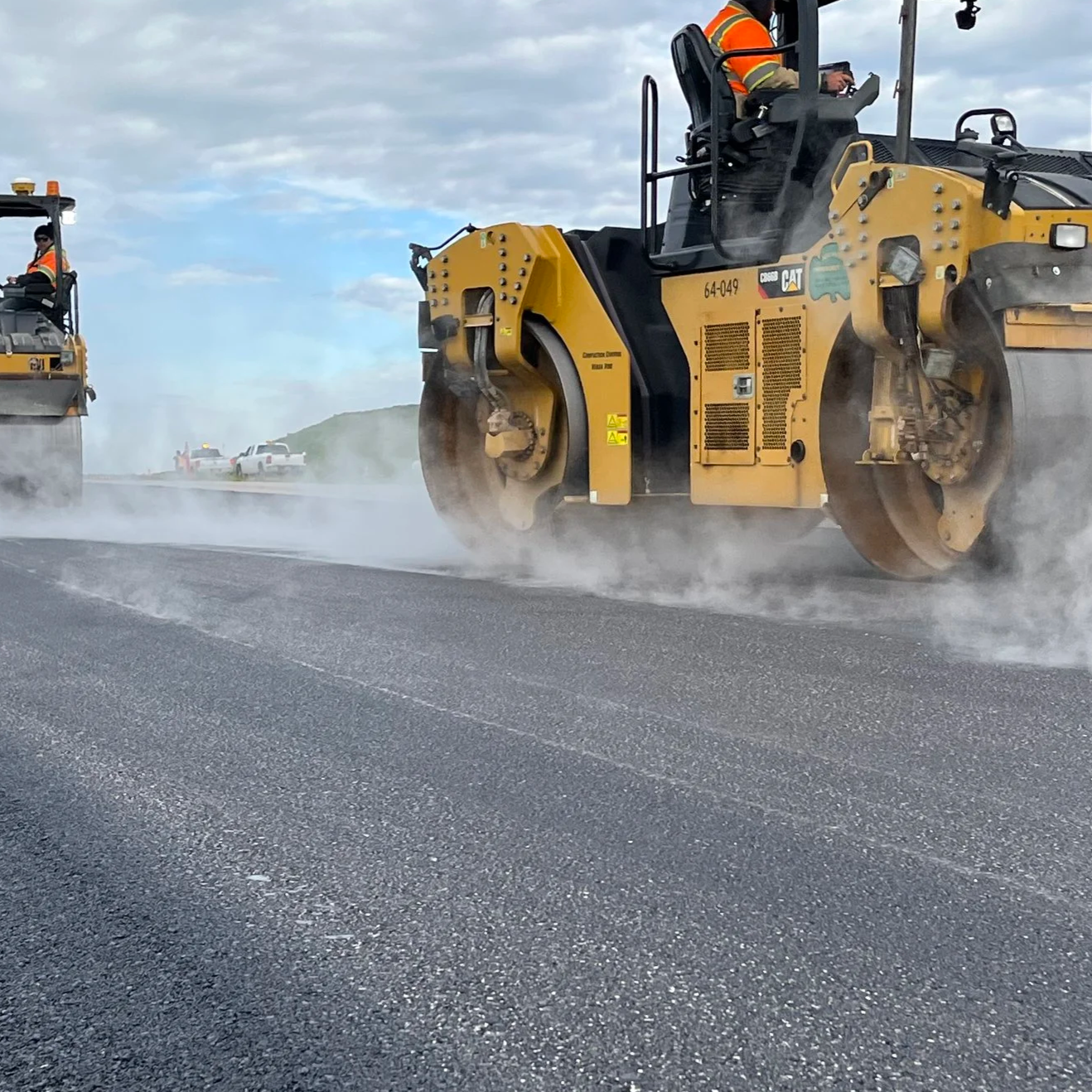
Paving crews often work in surface temperatures exceeding 300°F, making proper heat-resistant gear essential.
Plan for the environment. Heat exposure, fatigue, and long hours are invisible risks that creep in slowly but hit hard. Scheduling water breaks, rotating tasks, and encouraging crews to speak up about fatigue are small steps that make a big difference.
Finally, start every shift with a Job Hazard Analysis. Five minutes of reviewing site-specific risks can prevent hours—or even lives—lost later.
Where Leadership Makes or Breaks Safety
Guidelines and gear are important, but the real driver of safety is leadership. Crews mirror the culture set by their leaders.
If a superintendent rushes through a safety talk, the crew will see it as a formality. If leadership pushes production at the expense of rest, workers will push themselves past safe limits. But if leaders show that safety is non-negotiable—if they back their crews when they speak up—then safety becomes ingrained in the way the team operates.
At Pavewise, we’ve seen how technology can play a role here too. When we automate reporting, documentation, and daily check-ins, we free up crews to focus on what matters most: the work in front of them. And when workers are focused, they’re safer.
My Final Thoughts
Safety has never been about slogans or posters. It’s about culture. It’s about leadership. And it’s about equipping people with the tools—both physical and procedural—to do dangerous work as safely as possible.
The risks on paving sites aren’t going away. But our responsibility as leaders is to reduce those risks wherever we can. We’ve already raised the bar in quality and efficiency as an industry. Now it’s time to raise it in safety.
Because no contract, milestone, or deadline is worth more than the people who make this industry possible