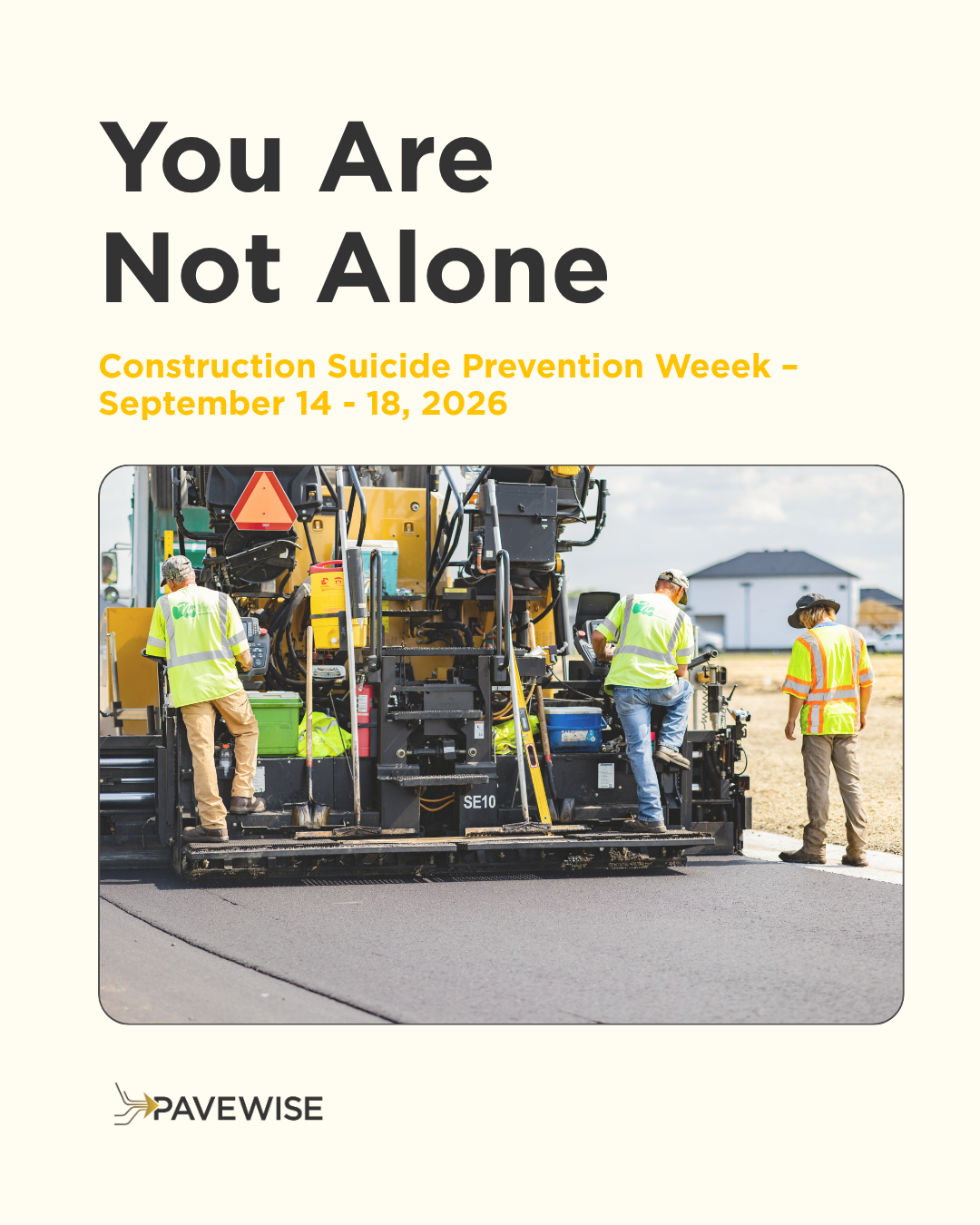
Construction Suicide Prevention Week: A Conversation This Industry Can't Keep Skipping
This One Is Personal
I don't write about mental health because it's a trending topic. I write about it because I've lived it.
Early in my career, I hit a wall. The kind that doesn't announce itself. It just shows up one day and you realize you've been running on empty for so long that you've forgotten what full even feels like. Long hours, constant pressure, the identity I'd built entirely around working harder than everyone else. I told myself that was strength. It wasn't. It was me outrunning something I didn't want to face.
I was lucky. I caught it before it got worse. A lot of guys in this industry don't.
That's why Construction Suicide Prevention Week matters to me. Not as a box to check or a post to put up. As a genuine reminder that the people building this country's roads, bridges, and infrastructure deserve the same attention we give to every other safety issue on the jobsite.
The Number We Don't Talk About Enough
Construction workers are six times more likely to die by suicide than in a jobsite accident.
Six times.
We have entire safety programs built around fall protection, equipment operation, and traffic control. We run toolbox talks, require certifications, invest in PPE. All of that is right and necessary. But the biggest threat to the people on our crews isn't the equipment. It's the weight they're carrying that nobody can see.
That disconnect between the safety culture we've built around physical risk and the silence we maintain around mental health is costing lives.
Why Construction Is a High-Risk Environment for Mental Health
This isn't random. There are real reasons our industry carries this burden.
The work is physically grueling and the seasons are unforgiving. Financial pressure is constant, especially for smaller contractors where a bad project or a slow winter can threaten everything. Schedules are unpredictable. Family time takes the hit. And layered over all of it is a culture that has historically rewarded toughness and punished vulnerability.
When you spend your career in an environment where asking for help is seen as weakness, you stop asking. You push through. You perform fine. Until one day you don't.
The isolation piece matters too. Crews travel. Projects end. The relationships that form on a jobsite are real, but they're also temporary. For a lot of guys, the social structure of work is the only one they have. When work dries up or changes, that disappears too.
What I've Learned About Saying Something
When I finally started talking openly about my own struggles, I expected people to pull back. Instead, the opposite happened. Message after message from people in this industry saying they'd been there too. Guys who looked completely fine on the outside, performing, producing, leading, carrying something heavy in private.
That told me everything.
The stigma in construction isn't that people don't understand mental health. It's that they don't feel safe enough to surface it. The culture hasn't given them permission yet.
Leadership has to change that. Not with a single post during awareness week, but consistently, over time. By asking how people are doing and meaning it. By talking about struggle without framing it as failure. By making it clear that needing support doesn't make someone less capable of doing the work.
What Actually Helps
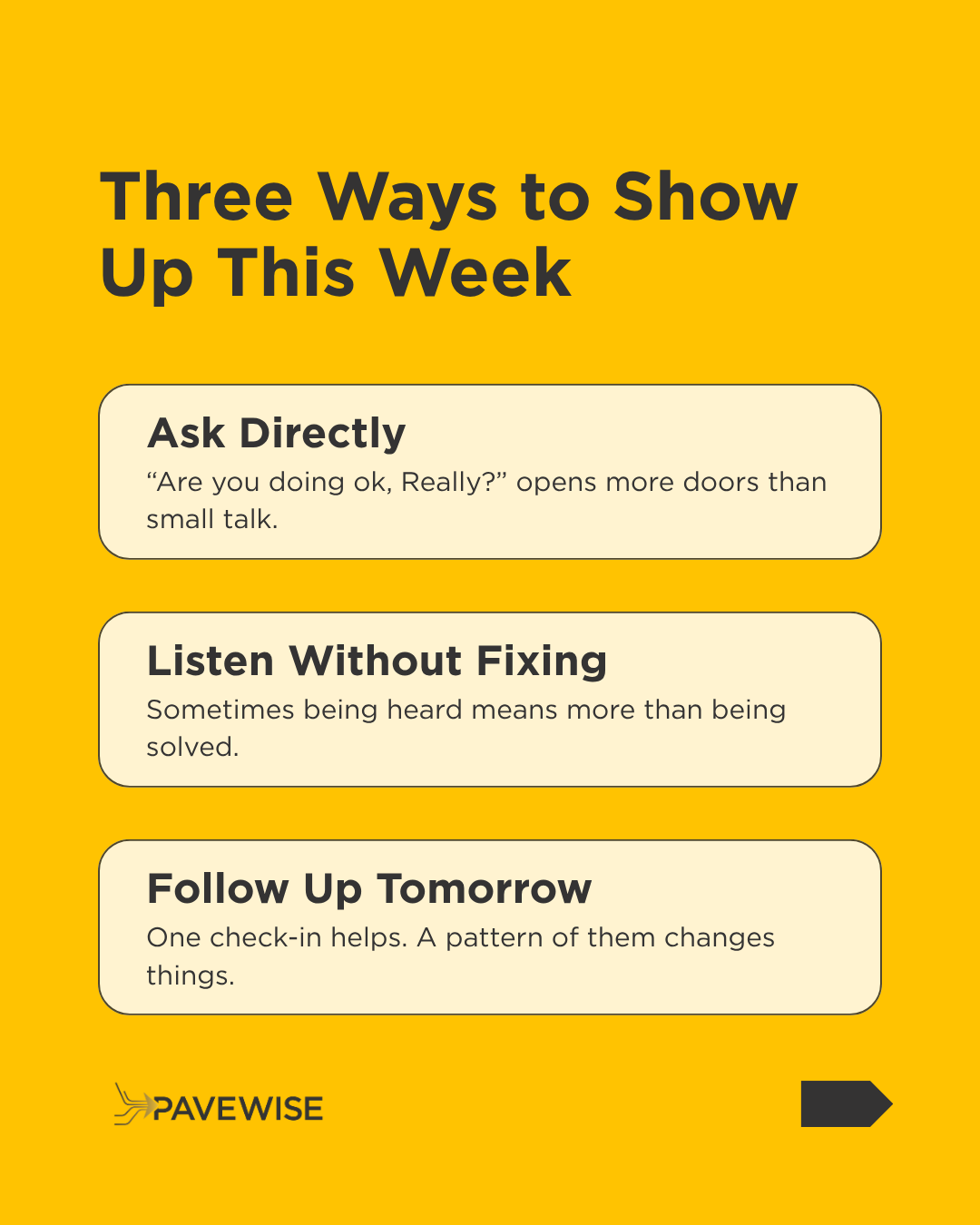
If you're leading a crew or running a company, here are a few things worth doing, not just this week, but year round.
Check in on people directly. Not about the project. About them. A simple "how are you actually doing" from someone they respect can open a door that's been closed for a long time.
Know the resources available and share them. The Construction Industry Alliance for Suicide Prevention has free tools built specifically for our industry. The 988 Suicide and Crisis Lifeline is available to anyone, anytime. Make sure your crew knows both exist.
Talk about it out loud. In toolbox talks, in team meetings, in casual conversation. The more normalized the conversation becomes, the less alone people feel in what they're carrying.
Take your own health seriously. Leaders set the tone. If you model the idea that rest, support, and self-awareness are signs of strength rather than weakness, your team will follow.
To Anyone Reading This Who Is Struggling
You don't have to be in crisis to reach out. And reaching out doesn't mean something is broken beyond repair. It means you're paying attention to yourself the same way you'd pay attention to a problem on the job, early, before it gets worse.
This industry is hard. The pressure is real. And you don't have to carry all of it alone.
If you're in a dark place right now, please call or text 988. Talk to someone you trust. Take one step toward getting support, even if it's a small one.
Final Thoughts
Construction Suicide Prevention Week exists because awareness saves lives. But awareness only works if it leads to action, in how we lead our teams, how we talk about struggle, and how we show up for the people around us.
I love this industry. I've dedicated my career to it. And I want the people in it to be here for a long time, not just finishing projects, but actually thriving.
We build things that last. Let's make sure the people doing the building last too.
If this resonates with you, share it. Pass it to a foreman, a superintendent, a crew member you've been meaning to check in on. One conversation can change everything.
Resources: 988 Suicide and Crisis Lifeline, call or text 988.