Training Alone Isn’t Enough Anymore
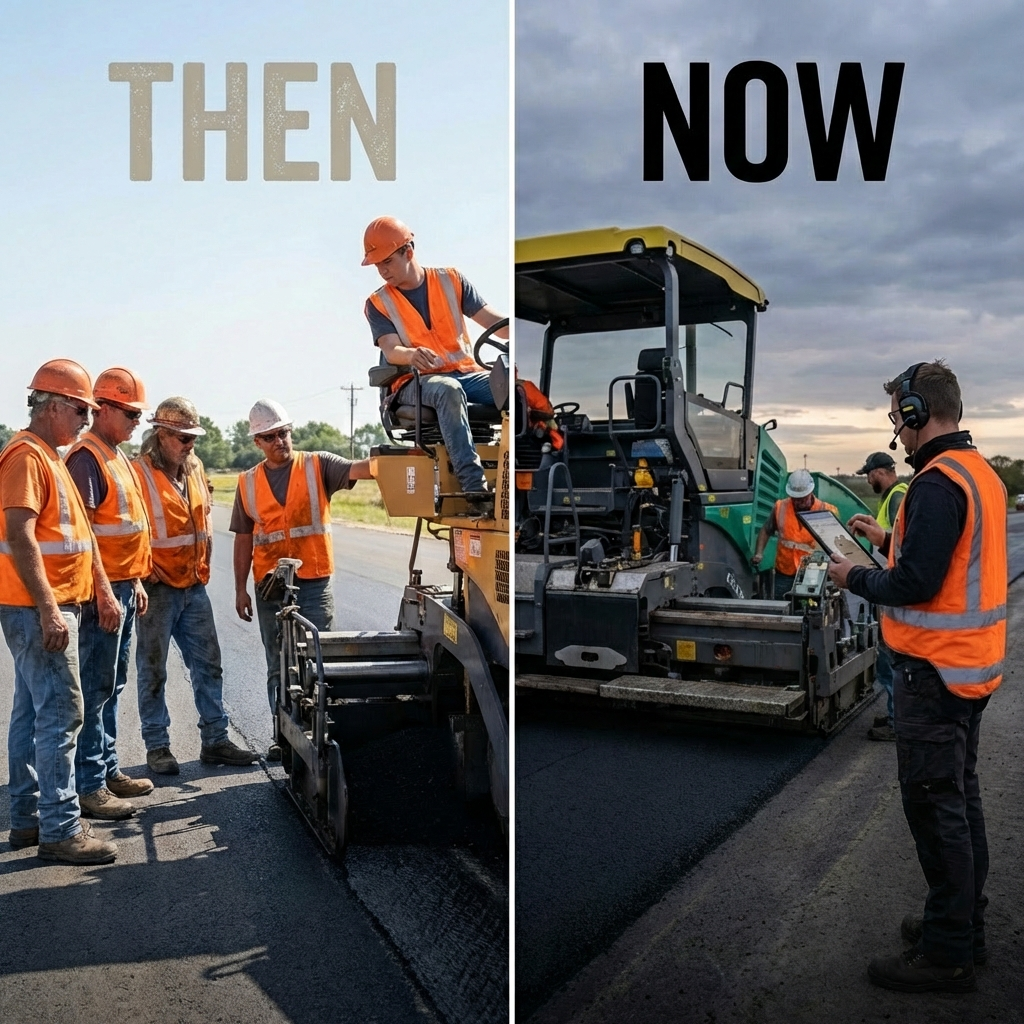
The industry has shifted from learning by doing to operating in compressed seasons with increasing digital accountability.
For a long time in paving, training followed a familiar path. You learned by doing. You watched experienced operators. You picked things up over time, season after season. That model relied on something the industry used to have more of: time.
Today, crews are being asked to do more in shorter windows, with fewer experienced people and higher expectations around quality, documentation, and accountability. The season is compressed. The margin for error is smaller. And the opportunity to learn slowly has mostly disappeared.
In that environment, training by itself is no longer sufficient. Not because crews don’t care or leaders don’t invest, but because the conditions around training have fundamentally changed.
The Industry Changed, but the Learning Window Shrunk
One of the biggest challenges in today’s operations is the gap between responsibility and readiness. People are promoted faster. Roles expand quickly. Crews rotate. And everyone is juggling multiple responsibilities at once.
Field teams are still expected to interpret specifications correctly, adapt to weather, manage production, and document work accurately. But they are often doing so while learning on the fly, under schedule pressure, and without the luxury of focused time to absorb new information.
When learning is rushed, people don’t internalize processes. They memorize steps just long enough to get through the day. That’s when mistakes start to compound, not because someone wasn’t trained, but because they didn’t have the space to fully understand what they were being asked to do.
Why Traditional Training Falls Short
Most training programs assume people can pause their work to learn. In reality, crews rarely get to focus on training alone. They are learning while producing, problem-solving, and reacting to changing conditions.
This creates a situation where training exists on paper, but execution varies in the field. Knowledge becomes fragmented. Each person fills in gaps differently. Over time, that variability turns into inconsistency, rework, and frustration.
The issue isn’t effort. It’s cognitive overload. When people are responsible for too much at once, even good training struggles to stick.
Consistency Requires More Than Instruction
In paving, consistency matters more than perfection. The best teams are not the ones relying on individual heroics. They are the ones that execute predictably, even when conditions change.
That level of consistency doesn’t come from training sessions alone. It comes from reinforcing expectations, clarifying decisions, and reducing the number of things people have to hold in their heads at once.
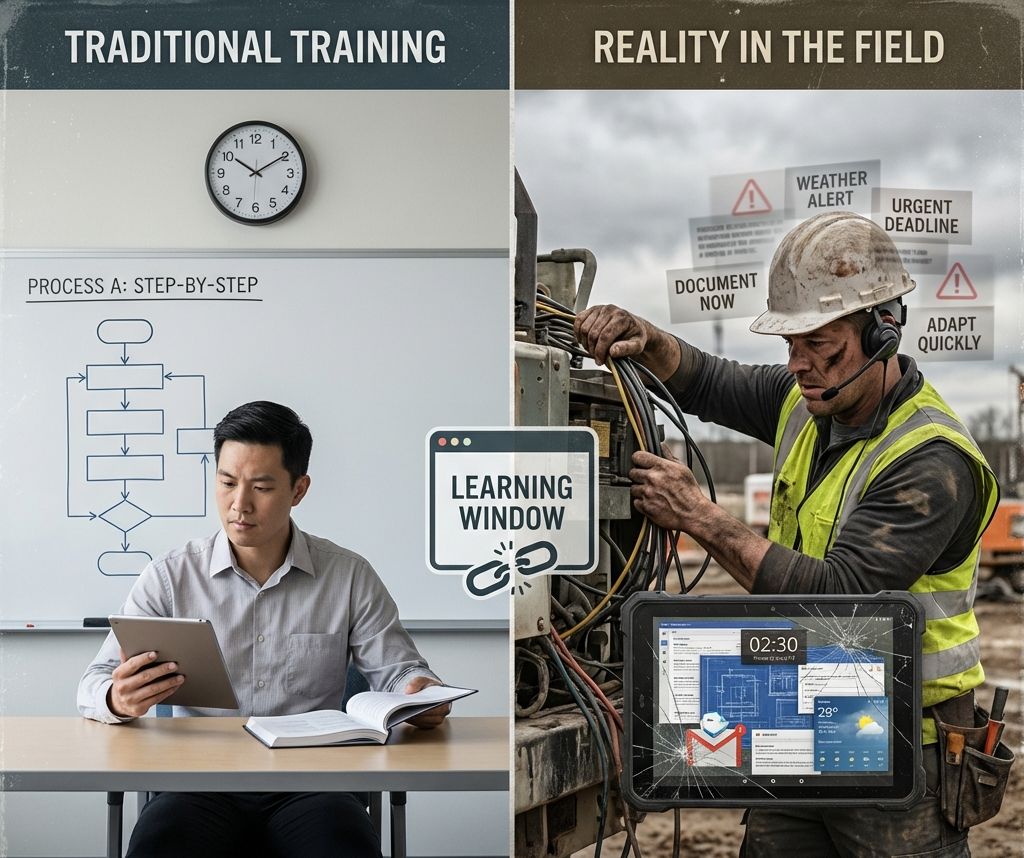
Traditional training assumes focused learning, while field reality often involves cognitive overload and rushed execution.
When crews understand not just what to do, but why it matters and how decisions connect across the job, they perform better under pressure. Training should support that understanding, not compete with production demands.
Supporting Crews Instead of Overloading Them
A common leadership trap is assuming performance issues come from a lack of discipline or motivation. More often, they come from unclear expectations and too much mental load.
Effective training should make work easier to do right. It should remove guesswork, reduce uncertainty, and help crews prioritize what matters most in the moment. When people feel supported instead of stretched thin, quality improves naturally.
The goal is not to slow work down. It is to reduce the rework, delays, and disputes that cost far more time and money later.
Training as Part of a Bigger System
Well-supported crews protect margins. They reduce risk. They produce cleaner documentation. They build trust with owners and agencies.
But training cannot exist in isolation. In a seasonal, high-pressure industry with ongoing labor challenges, it must be reinforced by systems, tools, and processes that help people apply what they’ve learned consistently in the field.
Investing in training is still critical. The difference now is recognizing that training alone cannot carry the weight it once did.
Final Thoughts
The days of slow, experience-based learning are largely behind us. The pace of the industry no longer allows it.
Supporting crews today means acknowledging the realities they operate in and giving them clarity, structure, and reinforcement beyond traditional training. When learning is supported by the right systems, teams don’t just move faster. They work smarter, with less stress and more consistency.