Breaking the Silence: Mental Health in Construction
Why We Can’t Keep Quiet Anymore
In the construction industry, there’s an unspoken rule: leave your emotions at the door.
For years, I followed that rule — and it nearly broke me.
Construction has long been defined by toughness, endurance, and a “grind harder” mentality. We pride ourselves on pushing through pain, fatigue, and stress to get the job done. But that mindset, while admirable in some ways, can also become dangerous. Beneath the surface of this industry’s resilience lies a truth we rarely talk about — one that has become deeply personal to me: mental health matters just as much as physical safety.
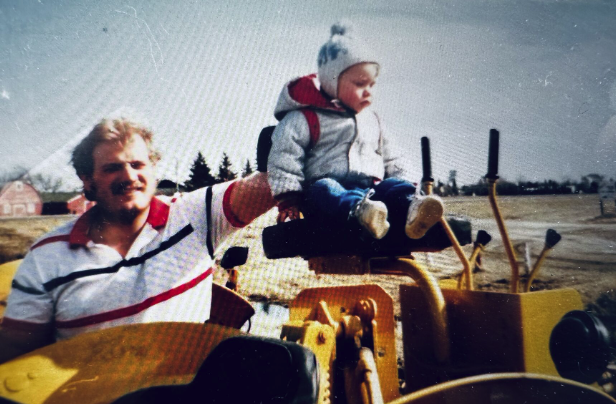
1 in 5 workers are struggling.
A Personal Turning Point
Seven years ago, I hit a breaking point. My entire identity revolved around working harder, staying longer, and never slowing down. I told myself that rest was weakness — that taking care of my mental health meant I wasn’t cut out for the job.
Then everything caught up to me.
The long hours, the constant pressure, the fear of falling behind — it all collided. What I once thought of as drive turned out to be self-destruction.
That was my wake-up call.
Since then, I’ve worked hard to shift my mindset, not just for myself but for others in this industry. I began to realize that if I wanted to keep showing up for my team, my company, and my family, I had to take care of me first. Self-care isn’t a sign of weakness — it’s the foundation of sustainable leadership.
From Silence to Advocacy
For a long time, I didn’t talk about my struggles.
I thought people wouldn’t understand. I thought admitting burnout or anxiety would make me seem unfit to lead.
But over time, I realized that silence only makes the problem worse.
When I finally started sharing my story — the late nights, the exhaustion, the pressure — I was overwhelmed by how many people reached out and said, “I’ve been there too.”
That’s when I knew: this isn’t just my story. It’s our industry’s story.
Today, I’m proud to be part of the growing movement of people in construction who are speaking up about mental health. Every time someone shares their story, it chips away at the stigma that has kept too many suffering in silence.
The Hard Truth We Can’t Ignore
Here’s a fact that should stop every one of us in our tracks:
If you work in construction, you are six times more likely to die from suicide than from a jobsite accident.
Let that sink in.
We’ve made incredible progress when it comes to safety standards, protective gear, and physical health on the jobsite. But mental health? That’s still our biggest blind spot.
Our greatest threat isn’t the equipment we use — it’s the weight we carry that no one sees. The stress of deadlines, seasonal layoffs, financial pressure, and the constant demand to “be tough” creates a silent crisis in our workforce.
We can’t build safer roads, bridges, and communities if we’re breaking the people who build them.
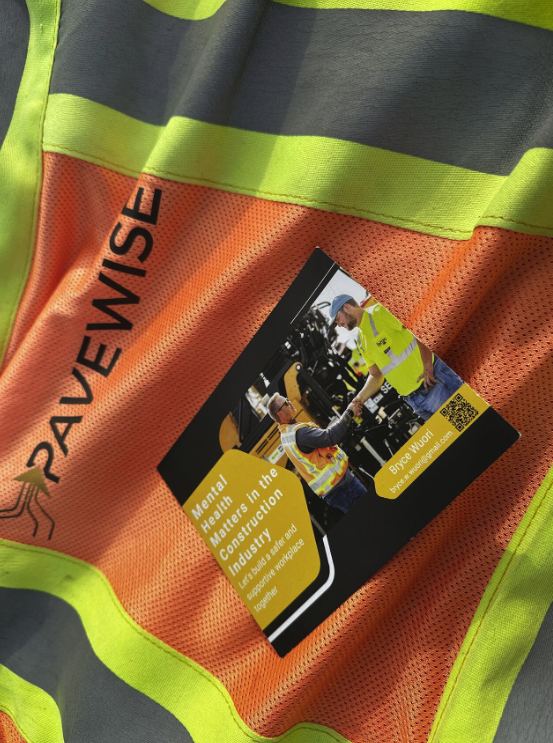
Suicide Rates are 4x higher in the Construction Industry.
Redefining Strength
So how do we change this?
It starts with redefining what it means to be strong.
True strength isn’t pretending everything’s fine. It’s being honest when it’s not. It’s taking a break before you break down. It’s checking in on your crew not just to ask if the rebar’s set — but to ask if they’re okay.
I’ve learned that leadership isn’t about having all the answers. It’s about creating a culture where people feel safe to ask for help. At Pavewise, we talk a lot about saving time and increasing efficiency — but those things only matter if we’re building systems that support healthy, thriving teams.
When we take care of our mental health, we make better decisions. We communicate more clearly. We lead with empathy. And ultimately, we build a stronger, more sustainable industry.
A New Normal for Construction
I’ve seen the difference that open conversations can make. Every LinkedIn post, every toolbox talk, every podcast, and every one-on-one conversation adds up.
The more we talk about it, the more we normalize it — and the more we can change the industry for the better.
So to everyone out there sharing their stories, advocating for mental health awareness, and challenging the old-school mindset: thank you. You’re helping create a new normal in construction — one where mental health is part of the safety conversation, not separate from it.
And to anyone reading this who’s struggling: you’re not alone. There’s strength in speaking up, and there’s hope in knowing this industry is finally starting to listen.
Final Thoughts
At the end of the day, I love this industry. I’ve dedicated my life to it.
But loving something means being honest about where it needs to grow.
Construction is built on hard work, grit, and pride — but it should also be built on compassion, support, and community. If we can build skyscrapers that touch the clouds and roads that last decades, we can also build a culture that takes care of the people doing the work.
Because our biggest threat isn’t what we do — it’s what we don’t do when it comes to mental health.
Let’s start doing something about it.
Do More
If this message resonates with you, share it. Start a conversation. Reach out to someone who might need to hear it. And if you’re leading a team, take one extra step this week to check in — not about the project, but about the person.
Together, we can build a stronger foundation for the people behind the progress.