Why Most Construction Tech Still Doesn't Work in the Field
The Promise Was Simple. The Reality Isn't.
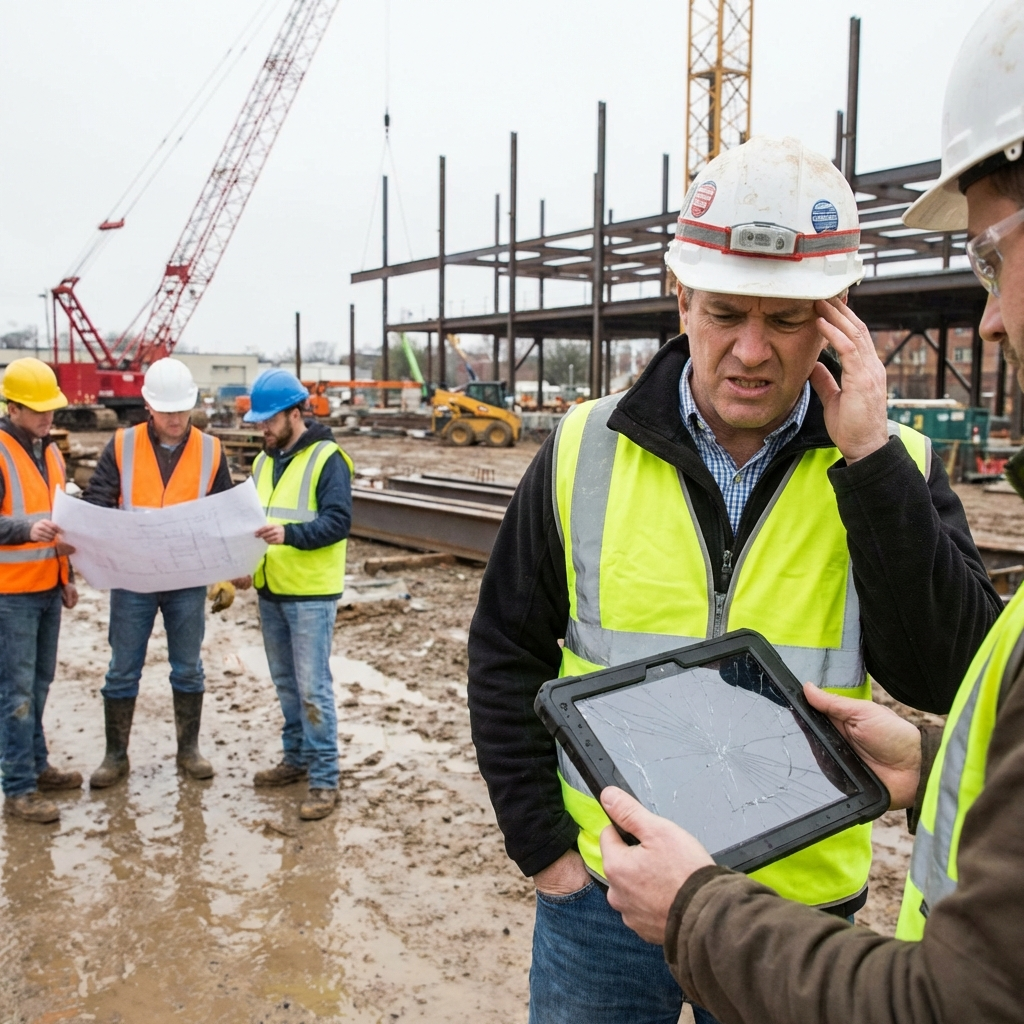
For the last decade, the construction industry has been told that digital transformation would solve its biggest problems. Better visibility, less paperwork, faster decisions, more control over what's happening in the field.
And the investment has followed. Software platforms, sensors, connected jobsite tools, dashboards everywhere. The market for construction technology has grown enormously.
So why do so many paving crews still run on spreadsheets, text messages, and whiteboards?
Because most construction tech was built by people who understand software, not by people who understand paving. And there's a big difference between a tool that works in a demo and a tool that works at 5 AM in 90-degree heat with a crew of eight people who need information fast and don't have time to troubleshoot an app.
Where the Gap Actually Shows Up
The failure point for most construction technology isn't the technology itself. It's the translation problem between what the tool does and how field crews actually work.
Take data collection. Plenty of platforms can capture project data. The real question is whether the person running a roller, managing a paver, and watching compaction all at the same time can actually use that tool without it becoming one more thing to babysit. If the answer is "they need training, a good signal, and fifteen minutes to figure out the interface," the tool will get abandoned before the first season ends.
The same problem shows up on the office side. A dashboard that shows everything is not the same as a dashboard that shows the right thing at the right moment. Data overload is its own kind of blindness. If a project manager has to dig through four screens to find what they need, they'll stop looking.
Complexity kills adoption. Every time, without exception.
The "More Data" Trap
One of the most common mistakes in construction tech is the assumption that more data is always better. Build a sensor, collect everything, figure out what matters later.
That approach produces platforms full of numbers that nobody acts on. Reporting for reporting's sake. Impressive in a board meeting, useless on a jobsite.
The right question isn't how much data can we capture. It's what decisions does this data need to drive, and when does it need to drive them? Quality data that helps a foreman make a call in the moment is worth far more than a comprehensive dataset that gets reviewed in a weekly report nobody reads until Friday afternoon.
The best tools in this space are focused on decisions. They don't try to replace the operator's judgment. They support it at exactly the moment it's needed.
Why Adoption Fails
I've talked to enough contractors to know that failed tech adoption usually comes down to one of three things.
The tool added steps instead of removing them. If going digital means the crew has to do the same work twice, once in the field and once in the system, you've just added friction to an already demanding job. Nobody has bandwidth for that.
The tool solved a problem that leadership cared about, not a problem the field cared about. Reporting dashboards are useful for executives. They don't help a foreman who needs to know whether mat temp is in range before it's too late to adjust. When field teams don't see value for themselves, they find workarounds fast.
The implementation assumed perfect conditions. Good signal, charged devices, time to learn, consistent workflows. Paving doesn't offer any of those reliably. Tools that can't survive real jobsite conditions aren't actually jobsite tools.
What works is simpler: focused, field-first tools that reduce the number of decisions people have to make, not add to them. Technology that fits into how work already happens instead of demanding that work reorganize itself around the technology.
The Right Question to Ask
Before evaluating any new technology, I'd encourage contractors to ask one honest question: does this make the job easier for the person doing the work, or does it make it easier for someone watching the work from an office?
Both have value. But if the answer is mostly the second one, expect slow adoption and a tool that collects dust by the end of the first season.
The best technology in paving right now isn't the most sophisticated. It's the most useful, to the people who actually need it, in the moments that actually matter.
Final Thoughts
Digital transformation in paving is real, and the contractors embracing it thoughtfully are building genuine competitive advantages: better documentation, faster decisions, fewer disputes, stronger margins.
But the path there isn't buying the most impressive platform at a trade show. It's asking hard questions about what your team actually needs, where the real friction exists in your operation, and whether a given tool genuinely removes that friction or just moves it around.
Technology should serve your process. If it doesn't, it's not the right technology, no matter how good the demo looked.
Pavewise is built by people who've worked in paving, for teams who work in paving. Follow along or connect with me to learn more about what that looks like in practice.